Bench Press Shoulder Pain
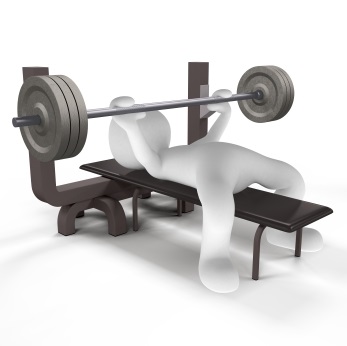
There is no question that the bench press is a very popular exercise for strengthening the pectorals. Although effective, this exercise can prove painful for many people so attention needs to be given to proper technique. Here are a few tips that are supported by published research…
Shoulder Tendons and Lifting Too Low…
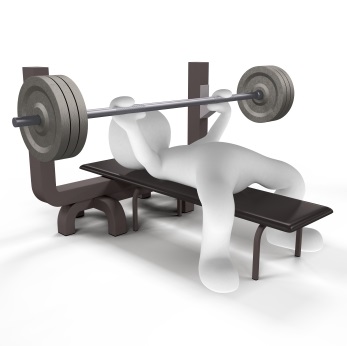
That burning stretch you feel at the bottom of the bench press is not necessarily the good type of “burn”. If you lower the bar to touch your chest, you’re likely to be straining the end of the pectoral muscle at the musculotendinous junction instead of targeting the pectoral muscle tissue. It’s recommended that you keep the bar 4 to 6 centimetres above your chest when performing this exercise. You can roll up a towel and place it on your chest if you need the reminder!
Shoulder Injury and a Wide Grip
A grip that is too wide forces your shoulder into excessive external rotation. This can damage the passive structures in the front of your shoulder joint leading to chronic capsular laxity. If you’re someone who has dislocated your shoulder in the past or if you are known to have “loose” joints, a wide grip may increase the likelihood for certain types of injury. The recommended grip width is no wider than 1.5 times your acromial width (the acromions are the bumps on the top of your shoulder). Worried that this will reduce your strength too much? According to the literature, you should expect only a 5% deficit in strength with this change.
Shoulder Pain and Flat Bench Press
When you place the bench on an incline it forces your shoulder into external rotation. If you’re someone with a structural deficit in the front of the shoulder joint (perhaps due to the aforementioned laxity or a history of dislocation) you’ll find that this increases the likelihood of pain or injury. Try keeping the bench flat and see if that makes a difference. Worried about strengthening your upper chest? According to some literature, inclining the bench does not alter the activity of the upper pectoral. Instead, it decreases the activation of the sternal portion of the pectoral (in the midline of your chest).
Active Release Technique for Shoulder Pain
Our chiropractic and physiotherapy clinic in Burlington can help you with your shoulder pain. We offer various methods of treatment; which one is best for you depends on a variety of factors. Many people choose active release technique for their chronic shoulder pain, but it may not be right for you. For more information please contact us at 905.220.7858 or email us at info@burlingtonsportstherapy.com
References
Glass SC, Armstrong T. Electromyographical activation of the pectoralis muscle during incline and decline bench press. Journal of Strength and Conditioning Research 1997; 11: 163-167.
Green C, Comfort P. The affect of grip width on bench press performance and risk of injury. Strength and Conditioning Journal 2007; 29 (5): 10-14.
Lantz J, McCrain M. Modifying chest press exercises for athletes with shoulder pathology. Strength and Conditioning Journal 2005; 27 (3): 69-72.